


How Serious Is Arthroscopic Surgery?
If your orthopedic surgeon has suggested an arthroscopic operation, it’s only natural you wonder, ” How serious is arthroscopic surgery? “
Ars are the good news.
Arthroscopy is among the safest and least invasive orthopedic procedures according to physicians these days. Surgeons can now diagnose and treat joints through minor incisions rather than major surgery cuts that brings forth less pain, faster recovery, and fewer complications.
If done by an expert arthroscopy specialist such as Dr. Shekhar Srivastav, arthroscopic surgery produces very good results for patients suffering from sports injuries, ligament tear, cartilage damage, etc. and various joint problems.
Is Arthroscopic Surgery a Major Surgery?
Arthroscopy is a medical procedure, but it’s not classified as a major open surgery. Rather, it is a minimally invasive procedure.
The surgeon, during the operation, introduces a little camera or an arthroscope into the joint which is hurt by making minuscule cuts. Special instruments are then used to inspect and fix the damage without opening the whole joint.
Relative to traditional open surgery, arthroscopy causes:
- The surgeon, during the operation, introduces a little camera or an arthroscope into the joint which is hurt by making minuscule cuts.\The trauma to muscles
- Smaller scars
- Less pain
- Lower blood loss
- Speedy recovery
- The length of hospital stay is shorter
Arthroscopy for the majority of the patient is carried out as a day-care operation which means that the patient comes back home the same day.
Why Is Arthroscopic Surgery Considered Safe?
Orthopedic conditions treated by arthroscopy are so widespread, and it is the preferred approach due to their high safety profiles.
1. Minimal Incision
Instead of making a huge surgical cut, only few tiny incisions are made which leads significantly to less cutting and hence less trauma to the muscles and surrounding tissues.
2. Reduced Risk of Infection
A smaller wound means the exposure of the body to bacteria or the chance of getting an infection is greatly reduced.
3. Minimal Haemorrhage/p>
Because it is a minimally invasive therapy, blood loss should in most cases be very small.
4. Quicker Healing
Clinic staff will advise on physical therapy, including exercises or movement that will help the operated limb recover.
5. Accurate Surgery
The arthroscope is an optical fiber attached to a TV screen. This allows the surgeon to visualize the inside of a body part and operate without making a large opening. Hence, he/she can perform very delicate surgeries.
What Conditions Are Treated with Arthroscopic Surgery?
Arthroscopy is often used for:
Knee Problems
- Torn ACL
- Torn PCL
- Torn Meniscus
- Torn Cartilage
- Loose Bodies
- Unstable Knee
Shoulder Issues
- Torn Rotator Cuff
- Shoulder Infection
- Stiff Shoulder
- Labral Tear
- Shoulder Impingement
Athletic Injuries
Arthroscopic surgery is a common treatment option athletes turn to after ligament or tendon injuries to get back on the field safely.
Are There Any Risks?
In general, surgical procedures, even relatively small ones like arthroscope-based surgery, have various potential risks. However, major complications seldom happen.
Some of the potential complications are:
- Infection
- Bleeding
- Deep vein thrombosis (Blood Clots)
- Swelling
- Joints stiff
- Nerve or blood vessel damage (Rare)
- Anaesthesia allergy
Picking an expert for orthopedic surgery via arthroscopy dramatically lowers these risks.
How Long Does Arthroscopy Stay Under the Knife?
Depending on the type of injury, the majority of cases can be finished between 30 minutes up to 2 hours.
Some examples are
- Knee arthroscopy: 30-90 minutes
- Shoulder arthroscopy: 60-120 minutes
- ACL Reconstruction: About 1 1ââ¬â2 hours
What Does the Postoperative Period Look Like?
The rehabilitation varies with the type of operation, generally.
The recovery periods may have such stages:
- Walking with the assistance: 1-2 day(s)
- Work from home: 1-2 weeks
- General activities: 2-4 weeks
- Sports training: Few months, depends on the operation
- Completely recovered: Depends both on the type of the injury and rehab.
Keeping up with your surgeon’s physiotherapy and rehab programs are vital to your optimal healing.
Why Experience Is Important?
Even if an operation is minimally invasive, still, the level of the outcome depends on the proficiency and skill of the operating surgeon.
Dr. Shekhar Srivastav, an orthopedic surgeon with arthroscopy subspecialty, has extensive knowledge and clinical skills in the following:
- Knee Arthroscopy
- Shoulder Arthroscopy
- ACL Reconstruction
- Meniscus Repair
- Rotator Cuff Repair
- Sports Injury Surgery
- Ligament Reconstruction
Dr. Srivastav’s personalized care, use of modern techniques, and planning for comprehensive rehabilitation enables safe recovery and restoration of function in the injured joint.
Benefits of Arthroscopic Surgery
People who undergo arthroscopy do so because it presents an option that is:
- Minimally invasive
- Requires smaller cuts
- Causes less pain after surgery
- Presents very few chances of getting an infection
- Allows one to get better much more quickly
- Leads to reduced time spent in the hospital
- Results in getting back to job faster
- Provides better cosmetic appearance
- It has high success rates for a wide range of arthritic, osteoarthritis and rheumatoid
When Should You Consider Arthroscopy?
It’s time to see an arthroscopy expert if you still feel:
- Discomfort in joints
- Knee jamming
- Problems with shoulder joint (instability)
- Injuries resulting from sports
- Ligament tears
- Meniscus injuries
- Swelling and/or inflammation in areas of the body that have been hurt by injury and which have not improved or which have been caused by illness and have continued without being treated
- Joint movement has been reduced
It is essential to get your problem addressed in the earliest stages, as early treatment stops further degeneration of your joints and enhances your long-term health status.
Conclusion
How dangerous is a surgical intervention of arthroscopy? Despite its classification as a surgery, and the necessity for proper medical assessment before the operation, arthroscopy is usually viewed as safe, minimally invasive and not nearly as drastic as classical open surgery. Thanks to tiny cuts, less pain, faster recovery time and very low rate of complications, arthroscopy became the method of choice for the majority of joint-related disorders.
If arthroscopic surgery comes to your mind as a treatment option, you should go the route of working closely with a highly skilled specialist, one of them is Dr. Shekhar Srivastav, whose help can make things much smoother: right diagnosis, suitable for your case individualized care and excellent recovery rate.
Frequently Asked Questions
1. Is arthroscopic surgery considered a serious surgery?
On the contrary, it usually is a minimally invasive surgery performed through small incision. Hence the risks associated are lower than those associated with conventional surgeries.
2. Is arthroscopy safer than open surgery?
Arthroscopy leads to lesser pain and recovery, and also smaller incisions in most cases.
3. Is it necessary to use general anesthesia?
Use of anesthesia will depend upon the nature of the procedure. One can have regional or general anesthesia during surgery.
4. Will it be possible to leave hospital after surgery?
Yes of a day care surgery for an arthroscopic procedure.
5. What is the nature of the pain after operation?
Most patients have only a mild to moderate level of pain, the same can be managed with medicine and physiotherapy.
6. Is an old person eligible for arthroscopy?
Old persons if their health allows should consider an arthroscopy as their treatment option provided that their disease warrants such an operation.
7. Can sport athletes get back to competition after arthroscopy?
Certainly, sportsmen and sportswomen who have an injury can be allowed for arthroscopic surgery if they follow the proper rehabilitation.
8. Does arthroscopy produce big holes?
Arthroscopy is the only way for a surgeon to reach deep joints by making very small openings on the skin, so the scars will be minimal.
9. What is the rate of success on the arthroscopy?
High success rates of patients after arthroscopic operations are expected if an experienced doctor and the patient’s disease were the right reasons to go for such surgical treatment.
10. Who is an ideal choice for an arthroscopic surgery?
An orthopedic doctor who is a specialist in arthroscopy and sports medicine, like Dr. Shekhar Srivastav, would be most ideal.
Related Posts
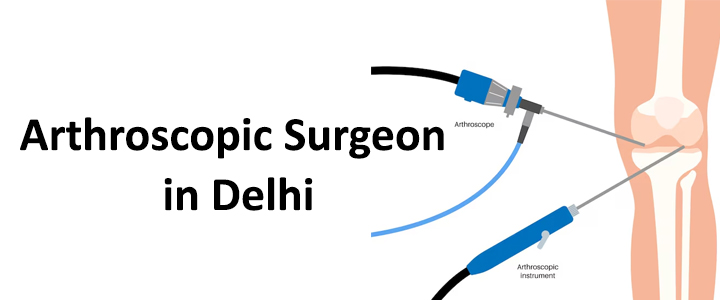
Arthroscopic Surgeon in Delhi
Arthroscopic Surgeon in Delhi | Best Arthroscopic Near Me If…
Suffering from an ACL Injury? Dr. Shekhar Srivastav Shares When Surgery Is the Right Choice
An ACL injury is among the most frequently occurring knee…
One Reply to “How serious is arthroscopic surgery?”
Comments are closed.