


Who Is the Best ACL Surgeon? A Complete Guide to Choosing the Right ACL Specialist for Successful Knee Recovery
Among athlete injuries, one of the most common is an ACL tear. A sports injury, fitness activity, or even a domestic accident may end in a tear of the Anterior Cruciate Ligament (ACL). Tearing of the ligament can lead to pain, difficulty in everyday tasks, and even sports performance. The question “Who is the best ACL surgeon?” does appear from time to time; however, a more appropriate question would be, “What qualities of an ACL surgeon would be the best for my condition?”
In most cases the choice of a surgeon is responsible for your recovery and the long-term mobility of the knee. This article provides the detailed explanations that you need before choosing the surgeon as well as highlighting factors that are of importance when deciding about a surgeon.
Explanation of ACL injury
The Anterior Cruciate Ligament (ACL) is one of the four major ligaments in the knee. This ligament connects the thigh (femur) to the lower leg bone (tibia) and maintains stability of the knee during activities.
ACL injury mostly results from:
- Twisting movements
- Sports and sports-related injuries
- A landing error after a bounce
- Car accidents
- Falls from heights
Typical signs and symptoms include:
- A cracking or popping sound from the area of the injury
- Rapid or immediate swelling of the knee
- Unstable or buckling knees
- Difficulties in carrying out tasks that require walking
- Discomfort when changing direction
Failure to treat an ACL injury promptly may result in meniscal tears, cartilage loss, and joint pain in later years.
Characteristics of the best ACL surgeon?
While years of experience is surely an important aspect, the best surgeon for ACL is the one who has the following qualities, professional level, state of the art techniques, putting the patients first and consistently good results.
The best surgeon must have these qualifications:
A wealth of experience
Due to the fact that the ACL reconstruction involves accuracy, an experienced surgeon can be expected to get it right most of the times. Generally the arthroscopic ACL reconstruction is done more often by highly-skilled surgeons.
Expertise in Sports-related injuries
Find out if the orthopedic surgeon who you want to do your surgery has a good history working with the following:
- Knee joint surgery ( arthroscopy )
- Injuries that affect sports performance
- Restoration of ligaments
- Knightly severe injuries
Experts in the treatment of knee injuries tend to obtain better clinical results due their dedicated work in this narrow field.
Arthroscopically Assisted Expertise in ACL Reconstruction
Mostly via minimally invasive technique with the help of an arthroscope the procedure of ACL reconstruction is being performed nowadays.
Among the positives that this minimally invasive surgery brings is:
- Tiny openings needed
- Minimal discomfort felt
- Requiring very few days for the one to come back to normal life
- The possibility of infection is lower
- Cosmetically speaking, the scars are not so noticeable
Why Expertise of Surgeon Matters
We all know ACL tears are not a unique thing when it comes to people but the treatment also vary for different individual cases.
The patients are of course in different situations, some have:
- Damage to Meniscus
- A bit of cartilage damage
- Tears involving many (more than one) ligaments
- Failed ACL surgeries that are not successful previously
Only very skillful and experienced ACL surgeons are able to handle all these complicated ACL problems while at the same time minimizing the amount of knee function lost.
It has been noticed that surgeons who work on more cases per year tend to have their patients’ results improved and their complication percentages minimized.
Broad Application of New Techniques Results in Better Surgical Outcomes
In order to be able to compete well on an international level in the area of ACL injuries, one needs to master and use the following techniques:
- Use of the latest technology for intraoperative imaging in the joint (i.e., high definition images of the knee)
- MRI-guided surgical planning
- Application of ACL surgery techniques which are close to the human knee structure (i.e., anatomical reconstruction)
- Use of computer navigation systems
- Modern implants and devices for bone fixation (such as interference screws, staples, anchors, etc.)
The combination of all these elements brings better accuracy in graft orientation and also helps in getting the native knee range of motion back to normal levels.
Each Case of ACL Injury Needs a Personalized Treatment Plan
The one who has the most ACL reconstruction surgeries under their belt will tell you that no two ACL tears require the same treatment plan.
The top surgeon for ACL repair will always consider:
- Years lived
- Level of sports or leisure activities that the person engages with
- If the patient will still take part in sporting activities
- Type of job of the patient
- Knee joint stability
- Any other related injuries found on imaging or by physical findings
- General physical condition including comorbidities, body weight, nutritional status etc.
Personalized treatment planning of the ACL surgery is a must nowadays since every patient is unique with his medical as well as lifestyle requirements!
Post-op rehabilitation is the main ingredient to the ACL surgery’s success
There have been instances where a top ACL expert performed very good surgery, yet the end outcome was unsatisfactory because there was not a good postoperative management of the patient by the physiotherapist.
So, rehabilitation after ACL surgery should contain a combination of different exercises with the help of the physiotherapist to ensure a pain-free and fully functional restoration of the knee joint in the long run. In general, recovery is divided into 4 stages as below:
Phase 1: Control of pain and inflammation
- Ice Application
- Application of Compression Bandages (C)
- Gentle Exercise
Phase 2: Restore Mobility (Knee Joint Flexion & Extension)
Gradually, patients can return their knees to their original positions and even beyond.
Phase 3: Strengthening Exercises
Through targeted muscle group exercises, strength of hamstrings and quadriceps is enhanced, which helps in restoring normal knee function.
Phase 4: Athlete-Specific Rehabilitation Programs
Before they can resume competitive participation in sports, athletes are provided with special training for their sport which is done as a step in the recovery process.
The success of post-op recovery is contingent not just upon the skills of an ACL surgeon but also upon the capabilities of the physio therapy team involved.
Questions an ACL Patient Should Consider Before Selecting an ACL Surgeon
Just before you go for surgery, consider to ask a few simple yet crucial questions to your surgeon:
- Do you carry out how many ACL surgery a year
- Are you a specialist in arthroscopic knees surgeries
- Which type of graft do you suggest and what is your reason for that
- Could you tell me your success rate?
- What will be the duration of the recovery period
- Besides surgery, will you require me to see a physiotherapist?
- When am I allowed to engage in sports again
Getting clear information from the surgeon will be the best way to feel secure and make sound decisions.
Critical Indications that Suggest ACL Surgery
If you face one of the following difficulties, it is a sign that you should seek help from a specialist orthopedic doctor:
- Collapse of the knee
- Persistent instability of the knee
- Not being able to get back to the games
- Meniscus injury combined with ACL tear
- Requirement for knee joint in an active lifestyle
- Repeated episodes of swelling immediately after an activity
Your health care provider is most likely to advise you when the damage in the knee is at early stages. The early the diagnosis, the less the risk of damage to the joints.
ACL Surgery Recovery: How Fast Can One Get Back to Normal?
It varies from person to person how fast someone can recover. However, the average time for recovery is:
Recovery PhaseExpected DurationMobility with an aid1, 2 weeksNormal mobility4, 6 weeksRunning at a slow and relaxed pace3 monthsAthlete’s training and fitness6 monthsGoing back to the sports9, 12 months
To get maximum from your knee after surgery and physiotherapy, you absolutely have to follow the prescribed rehabilitation programme exactly.
Importance of Choosing the RightACL Surgeon
Opting for a skilled ACL doctor may help you gain multiple long term advantages:
- Proper medical diagnosis
- Use of up-to-date surgical skills
- Less chances of surgical complications
- Easier recovery
- Degree of knee stability that is good
- High chance of participation in sports again
- Little chances of getting injured in the same spot again
- Preservation of the joints and the knee’s good working.
An experienced ACL surgeon can be a big factor in one’s recovery and in keeping the knee joint well functioning in the long run.
A few Thoughts in Closing
When you are on the lookout for the best ACL expert in your region, don’t be misled into popularity alone.
You have to go for a surgeon having specialization in arthroscopic knee joint replacement, in case one is not able to do the job oneself, besides that one has to be supported by a team of well-motivated physiotherapists to assist the patient with all the physiotherapeutic exercises, and also that the surgeon should be working in state of the art hospital so that the patient can enjoy the benefits of the best available technologies. Such a surgeon can help you bring the knee stability back with the least time possible and can enable a much better lifestyle after the injury.
Call an orthopedic specialist for a knee consultation if symptoms include prolonged knee instability, knee pain or an imaging-verified ACL injury. Early diagnosis and proper treatment will allow you to continue with all the activities of your life, from daily routines, job, to the sport, with higher confidence and minimal risk.
Frequently Asked Questions (FAQs)
1. Who would you consider the expert ACL surgeon?
In most cases, an orthopedic surgeon who not only has great reputation but also specializes in arthroscopic ACL (anterior cruciate ligament) reconstruction, sports injury treatment and has excellent patient outcomes will be a qualified candidate. When selecting a surgeon besides reputation factors, give preference to knowledge, expertise/specialization level and patient-centric approach.
2. Is it always necessary to perform ACL surgery?
No, it won’t be a case of always. Sometimes just a partial tear or people with sedentary lifestyles get better by exercising and physiotherapy. On the other hand, patients with complete ruptures leading to joint instability almost always need surgical intervention for a sustainable improvement of their mobility.
3. To what extent is ACL replacement surgery effective?
Clinically, most advanced procedures for ACL replacement result in the successful restoration of 90% of knees after skilled surgeon’s intervention and combined with physical therapy.
4. For how many weeks do I have to be at home after ACL surgery?
For general activities, you’ll be ready in a few weeks, but it may take longer if you are involved in sporting activities where you have to rely on joint and muscle power to be successful. In most cases, it will take 9 to 12 months depending on the rate of healing of ligaments and rehabilitation.
5. Will ACL surgery make me lose a part of my ability to do sports ever again or maybe I’ll be able to do it even more with better technique?
Contrary to what some imagine, you are very likely able to go back your sport or do a new one! With a good surgical procedure, intensive physiotherapy, a sports physical therapist support, and medical certification, plenty of sportsmen and women are indeed playing their former level, or higher level. They might just have a more balanced sports career after surgery.
6. How can I know what orthopedic specialists have I options with that best meet the needs of an ACL patient?
Find and pick one that does not just focus on knee arthroscopy but performs ACL surgeries quite often, uses up-to-date technology, is very clear and informative to explain the different treatments that are open to a patient in case of their ACL problem, and besides surgery, offers rehabilitation assistance on a large scale.
Related Posts

Is it okay to delay ACL Surgery?
Is It Okay to Delay ACL Surgery? Tearing your anterior…

Shoulder Arthroscopy: A Minimally Invasive Solution for Shoulder Pain – Dr. Shekhar Srivastav
Shoulder pain disrupts daily activities dramatically. Sometimes even getting your…
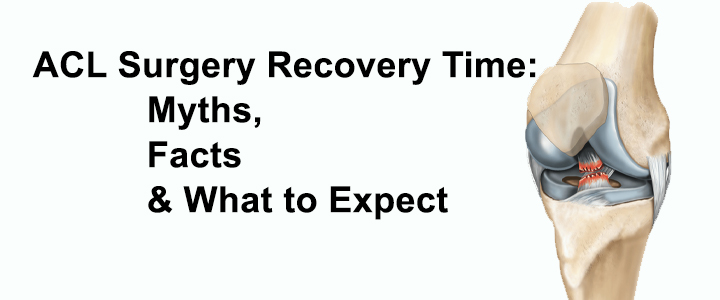
ACL Surgery Recovery Time: Myths, Facts & What to Expect
ACL Surgery Recovery Time: Myths, Facts & What to Expect…
One Reply to “Who Is the Best ACL Surgeon?”
Comments are closed.