


Understanding ACL Injury Recovery Time: What Doctors Want You to Know
ACL knee injuries are those most frequently referred to the medical department of athletes and fitness enthusiasts. In fact, such injuries are no exception to people who are not athletes but suddenly twist their knee. One of the issues that worries the most after an ACL tear is the recovery time for the injured ACL, that is, how much time it would take to get healed, the stages one goes through, and what the doctors really want to patients’ understand before rehabilitation. Here we explain the recovery timeline, the necessary stages for the healing, expert tips, and the factors that determine your ACL healing journey in detail.
What Is an ACL Injury?
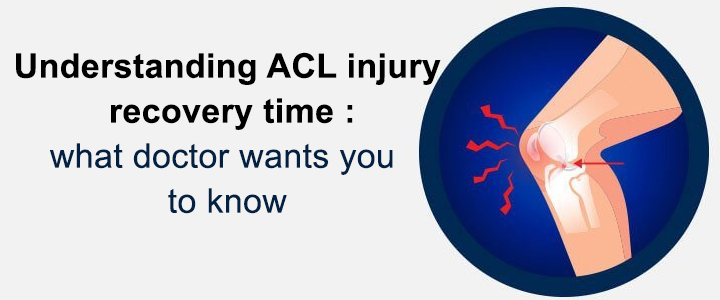
The Anterior Cruciate Ligament (ACL) is a major stabilizing ligament that helps control knee movement. It mainly stabilizes the rotation of the knee and the forward movement of the shinbone. If the ACL is stretched or torn after a sudden stop, jump, turn, or accident, limitation and pain will accompany the movement.
Based on the severity of the damage, doctors divide ACL injuries into three types:
- Grade 1: Minor sprain
- Grade 2: Partial tear
- Grade 3: Complete tear (usually requires surgery)
Where your recovery from an ACL injury will be mostly dependent on the type of the injury, additionally, your treatment choice will also be determining factor in the matter.
ACL Injury Recovery Time: What Doctors Want You to Know
The majority of orthopedic specialists are on the same page regarding the time frame of ACL injury recovery, which, after reconstructive surgery, normally extends from 6 to 12 months. However, each situation is unique, and the healing is influenced by factors such as age, physical condition, and the way you carry out your treatment and rehabilitation.
Here is the gist of what doctors often communicate with patients during recovery:
1. Recovery Is a Step-by-Step Process
It is very important for doctors not to be overlooked when they point out that the process of ACL recovery is not one that can be hurried. In fact, it may be that you feel “okay” after a short period of time, but the real healing that goes on inside will always take months. A surgical ligament graft, it is bound to fuse with your bone, it has to get its blood supply back and it has to become strong all over again. The occurrences of cutting, running or even jumping if it is before time, will result in the injury being caused again.
2. Physiotherapy Is Non-Negotiable
Rehabilitation after knee surgery should be an ongoing process with no breaks or interruptions, in other words, physiotherapy cannot be compromised or neglected, doctors recommend.
Physiotherapy helps you:
- Reduce swelling
- Get the knee moving
- Muscle up
- Regain balance
- Stop knee injuries from coming back
Physiotherapy is one of the major things that dictate how long the recovery from an ACL injury will be.
3. Strength Is More Important Than Speed
Doctors often advise their patients not to be hasty. It is very important to first strengthen the quadriceps, hamstrings, and gluteal muscles and then one can go back to any high-impact activity. With a strong lower body there is less danger of the ACL being put under pressure and thus the risk of a new injury is avoided.
4. Each Patient Recovers at a Different Pace
Though medical professionals give you a standard recovery timeline, not everyone heals at the same pace. The recovery duration from an ACL injury that you will need could be shorter or longer than the average, and that depends on such factors as your age, metabolism, physiotherapy discipline, and injury severity.
Detailed ACL Injury Recovery Timeline
Knowing a timeline helps you understand what you can realistically expect and thus it saves you from unnecessary stress or worrying.
Week 1–2: Pain Control & Movement Basics
The first two weeks after the injury or surgery the main goals are:
- Reduce swelling
- Control pain
- Range of motion improvement
- Light physiotherapy exercises
The doctors’ target for this phase is to have the patient regaining the knee movement from 0 to 90 degrees.
Week 3–6: Strength Building & Walking Practice
The focus of this period is:
- Strengthening of the quadriceps and hamstrings
- Correct walking practice without the use of a limp
- Improving knee mobility
- Starting balance exercises
Most of the patients are able to walk with little help by the 6th week if they have been doing their rehab correctly.
Month 2–4: Functional Training Begins
Leg presses, mini-squats, cycling, step-ups, and resistance band exercises are a few of the activities through which physiotherapy evolves in this period.
This period is very important for the development of the knee’s stability as well as for the decrease of the total time needed for recovery from an ACL injury.
Month 4–6: Light Sports Drills
The doctor’s nod of approval will see you undertaking the following:
- Light jogging
- Agility drills of a gentle nature
- Jumping under control
- Plyometric exercises
The knee gets prepared for more vigorous movements through this.
Month 6–12: Full Return to Activity
The aim here is to get the full strength, speed, and agility back again. Apart from checking on these, the medical team also evaluates:
- Muscle balance
- Knee stability
- Confidence level
- Range of motion
When all these factors are at the required level, a return to sporting activities or heavy workouts will be allowed.
Factors That Influence ACL Injury Recovery Time
According to doctors, the following factors have a significant impact on how long the recovery from an ACL injury will be:
1. Age & Physical Fitness
Patients, who are young or have good physical fitness, usually get well at a faster pace.
2. Severity of the Injury
It takes a complete tear all the more time for it to be healed in comparison with a partial tear or a sprain.
3. Surgical Method Used
By being less traumatic and more precise, minimally invasive procedures may limit the swelling and speed up the recovery rate.
4. Physiotherapy Consistency
A rehab plan that is well-structured and followed by the patient is the key to a fast and complete recovery.
5. Lifestyle & Daily Activity Level
People who practice daily walks, stretching, and other activities of similar nature will heal faster as compared to those that lead a sedentary lifestyle.
Tips to Reduce ACL Injury Recovery Time
These doctor-recommended, expert-backed tips are aimed at promoting quicker healing:
- Do not lose physiotherapy momentum
- In the initial period, refrain from high-impact activities
- Consume a diet rich in proteins
- Use cooling methods in order to alleviate and control the swelling
- If advised, provide support to the knee with a brace
- Execute proper warm-ups before any physical activity
- Do not twist or turn abruptly
Implementation of these small steps may greatly shorten your ACL injury recovery time.
Conclusion
Knowing how long it takes to recover from an ACL injury is a must if you want to map out your healing journey wisely. It is often stressed by medics that correct physiotherapy, endurance, and following a well-organized recovery plan are what lead to getting back full use of the knee. The time frame for recuperation is normally from half a year to one year but the most significant factor of your recovery will still be the amount of rehab work you will have to do.
Related Posts
ACL Graft Failed? Everything You Need to Know About Revision Surgery
There's a particular kind of frustration that comes with a…

Advanced ACL Reconstruction Surgery in Delhi – Dr. Shekhar Srivastav
Advanced ACL Reconstruction Surgery in Delhi – Dr. Shekhar Srivastav…