
What is an ACL Reconstruction Procedure?
ACL reconstruction is a type of minimally invasive surgery. The operation aims to replace a torn anterior cruciate ligament (ACL) in the knee. The ACL is one of the most important ligaments for maintaining the stability of the knee when one is walking, running, jumping, or changing direction.
Unfortunately, the ligament if torn completely doesn’t heal by itself. In such situations, orthopedic surgeons will suggest ACL surgery for getting your knee back to its normal functions.
Dr Shekhar Srivastav guides patients through arthroscopic operations and bespoke rehabilitation programs leading them to a successful recovery.
When is an ACL Reconstruction Surgery Required?
If a patient shows the following symptoms, an ACL surgery is recommended:
- Completely torn ACL
- Feeling of unstable knee all the time
- The knee suddenly giving way multiple times
- Injuries during the sports
- Injuries coming from the combination of damage to the meniscus or other ligaments
- Going back to daily activities becoming hard
This surgery not only helps in regaining stability but also minimizes the likelihood of a knee getting injured in the future.
The Method of ACL Reconstruction Surgery
This operation is generally done through arthroscopic methods (small incisions).
Phase 1: Anesthesia
The doctor may use either of the following for anesthesia
- General anesthesia
- Spinal anesthesia
This allows the surgeon to carry out the procedure
Phase 2: Making Small Cuts
The surgeon will make some very small cuts around the knee in order to:
- Insert an arthroscope (a very small camera)
- Use surgical instruments that are specially designed for this operation
Detailed pictures of the knee joint are shown by the camera on the screen.
Phase 3: Removing the Torn ACL
The surgeon gets rid of the damaged ligament meticulously.
Then, he prepares the knee for placing the graft.
Phase 4: Picking the Graft
Another ligament (graft) is used in place of the torn ACL.
Some popular graft options are:
Patellar Tendon Graft
The tissue used is from the front of the knee.
Hamstring Tendon Graft
The tissue is sourced from the back of the thigh.
Quadriceps Tendon Graft
The tissue comes from the front thigh muscle.
Donor (Allograft) Tissue
The tissue is taken from a donor.
The optimal graft selection depends on a patient’s individual characteristics, such as: age, lifestyle, and activity level.
Step 5: Making Bone Tunnels
Making bone tunnels involves
- the thigh bone (femur)
- the shin bone (tibia)
These tunnels are a great help for positioning the new ligament correctly.
Step 6: Putting the Graft and Securing It
The new ACL graft is passed through the bone tunnels.
The graft is then firmly attached with special fixation devices.
The surgeon is able to assess knee stability before finishing the operation.
Step 7: Wound Closure
The small cuts are sealed using surgical strips or stitches.
The knee gets bandaged and covered afterward.
How Long Does ACL Reconstruction Surgery Take?
On average, an ACL reconstruction takes about:
1 to 1.5 hours
Additional repairs may result in a longer surgery.
Is ACL Reconstruction a Major Surgery?
It certainly is an important orthopedic surgery but by the same token, it is considered as minimally invasive because arthroscopic techniques involve small incisions only that lead to:
- Less pain
- Smaller scars
- Faster recovery
- Reduced hospital stay
What Happens After ACL Reconstruction Surgery?
Your recovery will be a multi-stage process.
First Few Days
Some of the patient’s concerns are:
- Pain management
- Minimizing swelling
- Walking with crutches
Weeks 2 to 6
Among other things, the direction will be towards:
- Recovering knee motion
- Enhancing flexibility
- Starting strengthening exercises
Months 3 to 6
By this time, most patients can:
- Jog a little
- Use a bicycle
- Perform daily activities
Months 9 to 12
Once they have finished their rehabilitation, many athletes successfully get back to their sports.
Risks Associated With ACL Reconstruction Procedure
Just like any other surgical operation, risks include:
- Infections
- Blood clots
- Joint stiffness
- Chronic pain
- Failure of the graft
- Re-tearing of the ligament
Working with a highly qualified orthopedic surgeon is the best way to minimize these risks.
Benefits of ACL Reconstruction Surgery
The operation is capable of bringing several benefits:
- Knee stability is enhanced
- Pain is alleviated
- Mobility is improved
- Sports participation can be resumed
- Life quality is better
- Joint damage is prevented
Tips for Faster Recovery After ACL Reconstruction
To rapidly heal, try to:
- Attend every physiotherapy session
- Stick to your rehab plan
- Don’t rush to get back to sports
- Consume a balanced diet
- Make sure to have enough sleep
- Do not forget your follow-up visits with the doctor
Who is an Ideal Candidate for ACL Reconstruction?
If the following points describe you, then you may be an appropriate candidate
- Your ACL is torn completely.
- The affected knee often gives out.
- Sports player or a recreational athlete.
- Signed to a full active lifestyle and want to continue to be so.
- Tried conservative treatments to no avail.
Why Choose Dr Shekhar Srivastav for ACL Reconstruction?
Dr Shekhar Srivastav’s approach to ACL treatment is a holistic one:
- State-of-the-art arthroscopic surgical techniques
- Custom-made treatment programs
- Dedicated to handling sports injuries
- Based on research rehabilitation methodologies
- Caring and comfortable environment for patients
Ultimately, it aims to bring back the knee’s proper functioning and enable patients to engage in physically demanding activities without fear.
Conclusion
ACL reconstruction is a very effective way to restore the knee’s functionality after an ACL injury. Most patients recover fully and are able to resume their usual activities and sports within 9-12 months.
Getting treated early and following the recovery plan properly will give you the best chance at success.
Related Posts
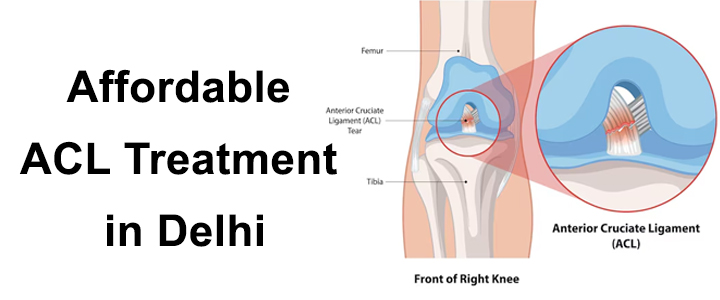
Affordable ACL Treatment in Delhi – Dr. Shekhar Srivastav
Affordable ACL Treatment in Delhi – Dr. Shekhar Srivastav Anterior…
Who is the Best ACL Surgery Surgeon Near Delhi?
Trusted Expertise by Dr Shekhar Srivastav For knee injuries, especially…

Which hospital is the best for orthopedics?
Which Hospital is the Best for Orthopedics? If you are…
6 Replies to “ACL Reconstruction Procedure: Step-by-Step Guide to ACL Surgery”
Comments are closed.