
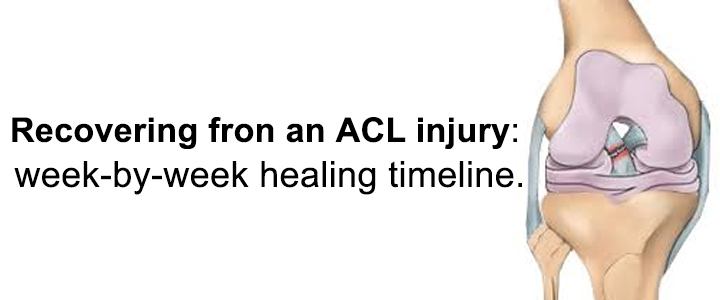
Recovering from an ACL Injury: Week-by-Week Healing Timeline
An ACL injury can significantly alter someone’s life, and this is particularly true for athletes and active individuals who are deeply reliant on the strength and mobility of their knees. The pain may have occurred during a sports activity, running, or a sudden twist, but in any case, the proper recovery is the only way to ensure the stability of the knee in the long run. The majority of patients quite often put forward the question, “How long is the recovery period after an ACL injury?”
Let us guide you through the different healing stages with a clear and detailed week-by-week recovery timeline that not only explains your expectations but also tells you how your knee should heal and what important targets you ought to concentrate on at every point of time.
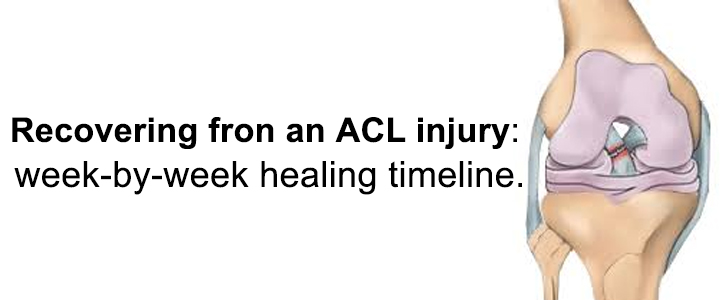
Before the repair work starts, it is important first to know what happened to the ACL.
The Anterior Cruciate Ligament (ACL) is a large supporting ligament in the knee. It is responsible for the control of rotation, going up for a jump, and quick changes of direction. Once the ACL is overstretched or ruptured, the knee is no longer stable and is accompanied by pain.
ACL injuries are graded:
- Grade 1: Mild sprain
- Grade 2: Partial tear
- Grade 3: A full rupture (usually necessitating surgery)
The majority of fully torn ligaments will have an ACL reconstruction surgery, which has to be followed by a well-planned rehabilitation program. Recovery is not immediate—it is a step-by-step process and needs close supervision.
Healing after an ACL injury: The stages of the week-by-week repair timeline
The schedule below indicates the progression of the recovery; exercises that you may carry out and the milestones to be achieved.
Week 1–2: Bringing Down the Swelling & Regaining Very Basic Movements
The first two weeks are about safeguarding the injured area and taking care of the pain only. Goals:
- Relieve swelling and inflammatory processes
- Restore early knee movement
- Activate quadriceps muscles
- Walk short distances with crutches
You employ ice therapy, compression, and elevation. Physiotherapy starts with very gentle movements such as heel slides, quad sets, and ankle pumps. An important accomplishment at this early stage of recovery from an ACL injury is getting the knee to move from 0 up to 90°.
Week 3-4: Improving Mobility & Starting Strength Work
At the third week, main attention goes from pain control to movement improvement.
Goals:
- Increase bending of the knee
- Develop the muscle of the thigh
- Improve the way of walking
- Decrease the use of crutches
Through your physiotherapy, the therapist will progressively show you such exercises as a straight-leg raise, mini squats, and gentle cycling on a stationary bike. Walking becomes stable more, and the swelling gradually is less. This stage is necessary to get the power later on.
Week 5-6: Building Stability & Controlled Movements
When swelling diminishes and mobility gets better, functional movements are permissible.
Goals:
- Enhance balance and coordination
- Further strengthen the leg muscle
- Walk without a limp
- Strengthen the knee ligaments
Work-out could be comprised of walking up stairs, bridges, exercises with resistance bands, and controlled single-leg movements. It aids your knee to get stability back again which is a very essential factor in a recovery process of an ACL injury.
Week 7–10: Advanced Strength Training Begins
The knee is tightly supported by muscles; it is prepared for even more demanding activities.
Goals:
- Develop the quadriceps and hamstrings muscles
- Increase stamina of the lower body
- Enhance the range of motion
- Improving core muscle strength
You are going through leg presses, lunges, exercises with the balance board, and as your physio allows you deeper squats. The transition from stiff to flexible is made smoother and you get more confidence in everyday activities.
Week 11-14: Rebuilding Functional Strength
This is a significant phase which hands over rehab to functional strength training.
Goals:
- Complete range of motion for the knee
- Better controlled movements
- Initiate low-impact cardiovascular training
- Decrease muscle imbalances
Regular activities become cycling, elliptical training, and very controlled step-downs. The physiotherapist assessing your knee alignment, strength balance, and coordination in order to prevent complications later on.
Week 15–20: Light Running & Agility Training
At this point, most patients actually feel quite normal—but this is the moment where discipline is most needed.
- Introduce light running
- Initiate simple agility exercises
- Enhance speed and coordination
- Get ready for advanced sports training
It is a time for the initiation of movements such as running in a straight line, side-stepping, and gentle ladder drills (only if authorized). This is a very important stage for athletes who have suffered an ACL injury.
Week 20–28: High-Level Strength & Jump Training
With the knee being stronger, it is the time to shift to more advanced activities.
- Engage in plyometric exercises (jump training)
- Gain explosive power
- Work on cutting and pivoting skills
- Enhance overall athletic performance
Here is where you become an athlete again, training controlled and under supervision only. Some of the exercises are box jumps, one-leg jumps, and directional movements.
Month 7–12: Full Return to Sports & Intense Activity
The final chapter is a journey from practice sessions to actual games or heavy physical activities.
Goals:
- Rebuild total power
- Equal the performance level of the non-injured leg
- Have a fully stable knee
- Be able to go back to the fitness level before the injury
Your physiotherapist or sports doctor assesses your strength, stamina, coordination, and psychological readiness. A return to competitive sports is only permitted after these tests have been successfully completed.
Factors That Affect Your ACL Recovery Timeline
Recovery will be different for each person even if they follow a detailed plan. The main factors are:
- Age and general condition
- Nature of the ACL tear
- Physiotherapy consistency
- Diet, hydration, and sleep
- Motivation towards home exercises
- Complications after surgery
All these factors hugely influence the smoothness and success of your recovery journey.
Tips for Faster ACL Recovery
To speed up your recovery and make it as complete as possible:
- Do not miss a session and strictly adhere to your physiotherapy plan
- Refrain from high-impact activities until you have sufficiently recovered
- Consume a diet rich in protein and other essential nutrients
- Apply ice in case of an inflamed area
- Help the knee by strengthening the muscles around it (glutes, hamstrings, calves)
- Keep your patience and maintain a positive state of mind
Conclusion
An ACL recovery is a staged process that requires patience, dedication, and professional guidance. This week-by-week healing timeline lets you see the milestones of your recovery and keeps you motivated during the whole process. The majority of the patients manage to restore the full functionality of their knees within 6–12 months if they are diligent with their rehabilitation program.