
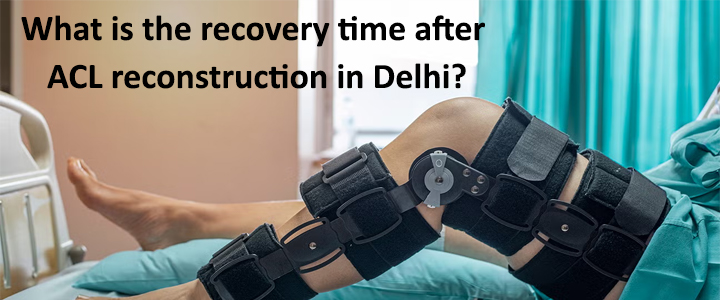
What is the Recovery Time After ACL Reconstruction in Delhi?
An ACL(Anterior Cruciate Ligament) tear is the most common cause of the knee giving out, particularly among athletes or those who lead an active lifestyle. Besides, ACL reconstruction is considered the only way to bring back stability, movement and muscle power. If you intend to undergo ACL reconstruction in Delhi, it is equally important to know about the rehabilitation process along with the recovery period for the result to be effective.
What Causes an ACL Injury?
The ACL is the most important ligament that stabilizes the knee by connecting the femur (thigh bone) to the tibia (shin bone). ACL injuries typically result from;
Stopping or changing direction suddenly while doing sports
Twisting movement or landing poorly
Accidents or falling
The first thing that indicates an ACL rupture is the time when a ‘pop’ sound is heard. Besides, the injured person will feel pain, swelling, and that the knee cannot be relied on. Without specific treatment, the situation may become unstable all the time, cartilage may be severely damaged, or there may be arthritis getting to its early stages.
What Does ACL Reconstruction Surgery Involve?
Reconstruction of the ACL is a less traumatic operation in which the doctor will install the new one in place of the torn one typically using the patient’s tissues (autograft) or a donor’s tissue (allograft).
Introduction of the operation:
Arthroscopic evaluation: Arthroscope, the small camera, is inserted to the knee for overview on the inside.
Graft preparation: Ligament replacement is made ready with the help of a tendon.
Graft fixation: The bone is drilled, and therefore, the graft fixed through screws or anchors.
Closure: The cuts are sewn, and sterile dressings are put on.
Due to this less invasive method, there are fewer scars, the patient experiences less pain, and the recovery period is shorter than in the case of an open operation.
Recovery Timeline After ACL Reconstruction in Delhi
The healing after ACL reconstruction goes through different stages, which are accompanied by a structured rehabilitation plan. The recovery period may change according to the patient’s age, physical condition, and compliance with physiotherapy.
Phase 1: Immediate Post-Surgery (Week 1–2)
Goals: The main goal is to bring back the normal state of the knee by alleviating pain, swelling, and redness.
Activities: The first days are for rest, however, the patient may use ice and light range-of-motion exercises to relieve the pain and reduce the swelling. The patient’s weight on the operated leg should be limited with the help of crutches.
Usually, patients are discharged and allowed to continue their recovery at home within 24–48 hours after the operation
Phase 2: Early Rehabilitation (Week 3–6)
Goals: The main goals are to restore the full range of motion in the knee and to initiate strengthening exercises
Activities: During this period, patients undergo a controlled rehabilitation program aimed at activating musculature around the knee such as quadriceps and hamstrings.
Transition from crutches to partial weight-bearing is done gradually
Phase 3: Strengthening and Flexibility (Months 2–4)
Goals: Muscle strength, the stability of the knee joint, and its flexibility are the primary goals at this stage.
Activities: The rehabilitation plan for this phase consists of low-impact activities such as cycling, swimming, and resistance training with bands or free weights.
Patients are capable of performing daily routines with little discomfort
Phase 4: Advanced Training (Months 5–6)
Goals: The athletes would be able to do skill drills that involve high-impact movements again and return to competitive games is their ultimate goal.
Activities: Running, jumping, and agility drills can be taken up as part of the program under the guidance of the trainer.
The knee is very stable by now
Phase 5: Full Recovery and Return to Sports (Months 6–9)
Around the 6–9 month period, patients are generally allowed to return to competitive sporting activities or engage in other high-intensity exertions.
The continuing physiotherapy undertakings maintain correct muscle coordination and thus, lessen the chances of a new injury.
Factors Affecting ACL Recovery Time
The list of factors that can affect your recovery speed from ACL reconstruction in Delhi includes:
Surgical Technique: A less invasive approach like arthroscopic surgery usually leads to a quicker recovery as compared to a traditional open operation.
Graft Type: There can be differences in recovery timelines when using autografts (from your body) versus allografts (donor tissue).
Age and Fitness Level: Usually, younger patients who are physically active recover faster.
Adherence to Physiotherapy: Commitment to rehabilitation after surgery is what ultimately leads to regaining the lost strength and mobility.
Additional Injuries: If there are other injuries such as to the meniscus or the cartilage, the recovery period will be prolonged.
Tips for a Faster and Safer Recovery
Do not miss any of your physiotherapy sessions.
In the beginning stages, refraining from sudden twisting or high-impact movements is advisable.
If your doctor gives you a green light, then a knee brace or support will help you.
Eating a well-balanced diet that is high in protein and vitamins will help the healing process of the tissues.
Keep your patience and maintain your effort — the healing process takes time, and if you rush, you will be risking again.
Why Choose ACL Reconstruction in Delhi
Delhi has top-notch orthopedic facilities and surgeons who are experienced in ACL reconstruction. Some benefits are:
Good surgeons to choose from. For example Dr. Shekhar Srivastav who is famous for performing arthroscopic knee surgery.
High-tech imaging and surgical instruments that require very small incisions
Pre and Post-Surgical Care essentially under the guidance of Experts
Perfect plans for treatment tailored to the needs of athletes, workers, and other people who lead an active lifestyle
Meet Dr. Shekhar Srivastav – ACL Specialist in Delhi
Dr. Shekhar Srivastav is a senior consultant and one of the best leading ACL surgeons in Delhi. He works at Sant Parmanand Hospital, Civil Lines. In his career spanning over 20 years, he has done excellent knee function, stability, and confidence restoration in thousands of patients.
Why choosing Dr. Srivastav:
Perfect handling of ACL reconstructive surgery and sports injuries management
Least invasive arthroscopic surgical methods
Individually tailored rehabilitation plans after surgery
Relationship with patients that led to their lifetime success and long-term trust
When to Consult an ACL Specialist
Connect with a specialist for ACL reconstruction in Delhi if you have:
After an injury unable to refrain from knee pain, swelling, or instability
Walking or running that cause difficulty
The knee giving-way that happens to you repeatedly
A history of knee injury that leads to limited mobility
Early consultation with an ACL specialist leads to better treatment results and fast recovery.
Conclusion
Usually, the recovery period after ACL reconstruction in Delhi is between 6 and 9 months. It largely depends on patient’s age, physical condition, surgical procedure as well as his/her compliance of physiotherapy. Under the help of Dr. Shekhar Srivastav, a top-tier surgeon for ACL cases in Delhi, patients will get accurate operation, planned rehabilitation, and safe return to play and daily routines.
Visit Dr. Shekhar Srivastav at Sant Parmanand Hospital by booking your appointment online. You are just a step away from that strong, stable, and pain-free knee.